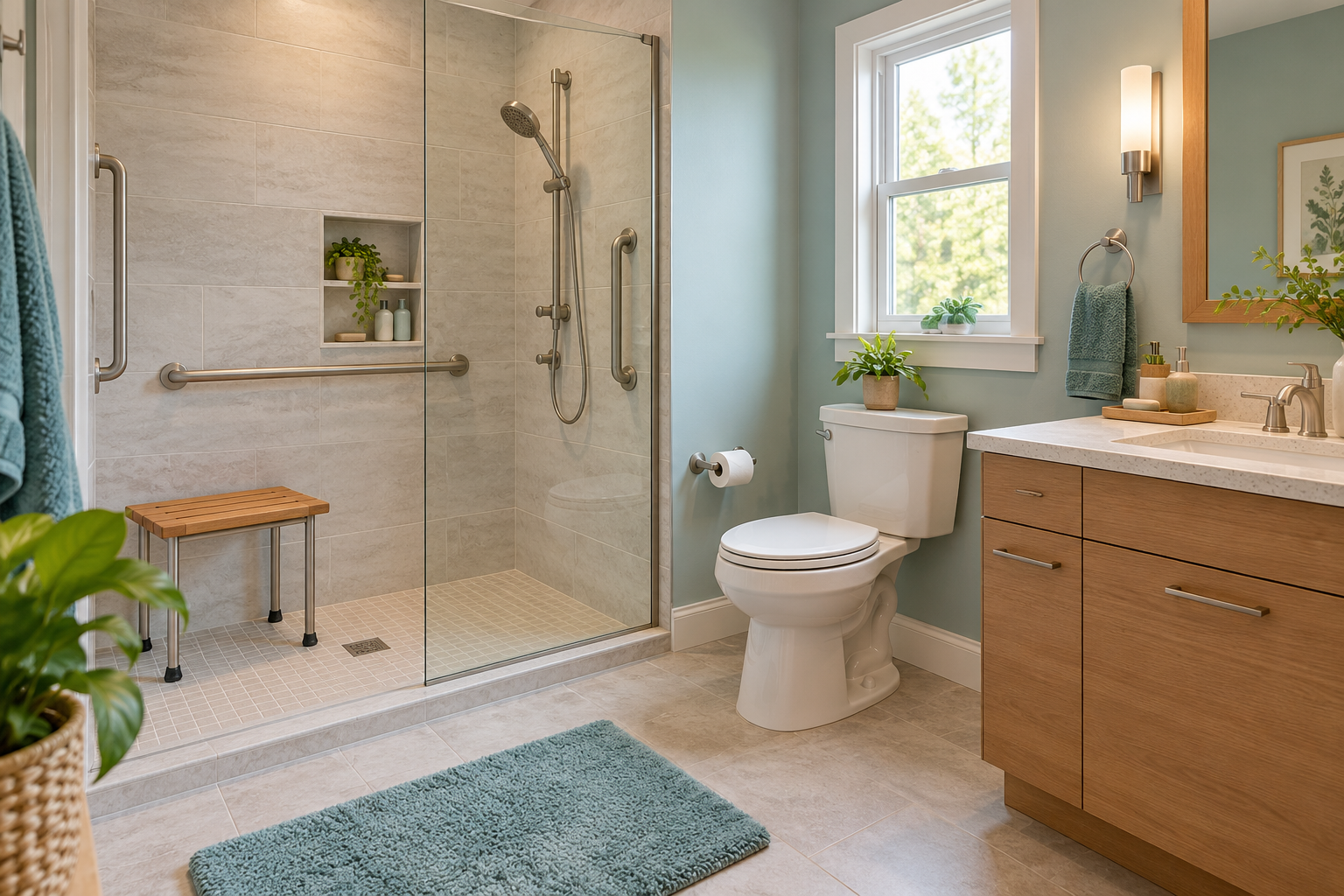
15 Simple Ways to Make a Bathroom Safer After 50
A bathroom should feel comfortable and private—not like an obstacle course. Unfortunately, water, smooth surfaces and limited space can create slipping and tripping hazards in even the most attractive bathroom.
The good news is that improving bathroom safety does not necessarily require a complete renovation. Several meaningful changes are inexpensive and can be completed in an afternoon. Others may require a handyman, plumber or contractor, but can make the room easier to use for years to come.
Whether you are making changes for yourself, helping a parent or planning to remain in your home as you get older, these 15 practical ideas are a sensible place to begin.
1. Start With a Clear Walking Path
Begin by looking at the bathroom from the doorway. Is there anything you must step over, squeeze around or avoid?
Remove laundry baskets, scales, wastebaskets, decorative stands and other objects from the normal walking path. Keep electrical cords away from the floor, and avoid storing frequently used items where they could fall into the walkway.
A clear path is especially important during nighttime bathroom visits, when someone may be tired, moving quickly or not wearing their usual shoes or glasses.
2. Remove Loose Throw Rugs
Small decorative rugs can slide, bunch up or catch a foot. The safest option may be to remove them entirely.
If you want a mat outside the tub or shower, choose one designed for bathroom use with a secure nonskid backing. It should lie flat without curled edges. Replace it if the backing deteriorates or no longer grips the floor.
Do not assume that a rug is safe simply because it feels heavy. Test it periodically on the actual bathroom floor.
3. Add a Nonslip Surface Inside the Tub or Shower
A wet tub or shower floor can become extremely slippery. Use a well-fitted nonslip mat or properly installed nonslip strips intended for wet areas.
Keep the surface clean because soap residue can reduce traction. Inspect mats and strips regularly and replace them if they begin to curl, shift or lose their grip.
The CDC and National Institute on Aging both recommend nonslip surfaces in tubs and showers as part of reducing bathroom fall hazards.
4. Install Properly Mounted Grab Bars
Grab bars can provide support when entering or leaving the shower, standing in the tub or rising from the toilet. Placement should match the person and the way the bathroom is used.
A towel bar is not a substitute for a grab bar. Towel bars generally are not designed to support a person’s weight and may pull away from the wall.
Permanent grab bars must be anchored correctly into suitable wall framing or another approved mounting system. If you are uncertain about the wall construction or placement, hire a qualified installer. Do not rely on a suction-mounted device as the primary support unless an appropriate professional has confirmed it is suitable for the intended use.
5. Consider a Stable Shower Chair or Bench
A shower chair or bench can make bathing more comfortable for someone who tires easily or feels less steady while standing. Choose equipment designed specifically for bathing, with nonslip feet and an appropriate weight capacity.
The chair should sit level and stable without blocking the entrance, controls or drain. Because individual needs differ, someone recovering from surgery or experiencing significant mobility limitations should ask an appropriate healthcare professional which style and setup would be safest.
6. Add a Handheld Showerhead
A handheld showerhead can make it easier to bathe while seated and can reduce unnecessary turning, reaching and stepping around.
Select one with a hose long enough to reach the shower chair comfortably. A wall-mounted holder that can be reached from both standing and seated positions makes the arrangement more useful for different household members.
Make sure the hose does not create a loop or obstruction near the floor.
7. Improve the Lighting
Good lighting makes it easier to see water on the floor, the edge of the tub and objects in the walking path. Replace burned-out bulbs promptly and consider brighter, evenly distributed lighting if the room has dark areas or heavy shadows.
Avoid relying on one light located behind the person using the sink or shower. Lighting near the vanity and bathing area can improve visibility, while shades or diffusers may help control uncomfortable glare.
Electrical work in a bathroom should be performed by a qualified electrician.
8. Light the Route to the Bathroom at Night
The path from the bedroom to the bathroom matters just as much as the bathroom itself. Add nightlights in the hallway and bathroom so the entire route is visible.
Plug-in lights, motion-activated lights or fixtures with dusk-to-dawn sensors can reduce the need to search for a switch in the dark. Position them so they illuminate the floor without shining directly into someone’s eyes.
9. Keep Everyday Supplies Within Easy Reach
Place soap, shampoo, towels, toilet paper and other frequently used items where they can be reached without climbing, twisting or stretching.
A wall-mounted shower dispenser or secure shower caddy may be more practical than bottles placed on the shower floor. Avoid overloaded hanging organizers that can swing, fall or interfere with a grab bar.
Store rarely used products elsewhere rather than crowding the bathroom with extra containers.
10. Keep the Floor Dry
A nonslip mat helps, but preventing water from reaching the floor is even better. Check whether the shower curtain, door seal or tub enclosure allows water to escape.
Repair leaks and replace worn seals. Keep an absorbent towel or appropriate cleaning tool within easy reach so small amounts of water can be addressed promptly—without bending into an awkward position.
If water repeatedly appears in the same location, identify and correct the source instead of simply covering it with another rug.
11. Make Water Controls Easier to Operate
Small knobs can be difficult to grip, particularly with wet or soapy hands. A single-lever faucet may be easier for many people to operate than separate round knobs.
Shower controls should be easy to reach without standing directly under the water while adjusting the temperature. A plumber can explain whether different controls or an anti-scald device would be appropriate for your plumbing system.
Avoid changing water-heater or plumbing settings unless you understand the equipment and applicable manufacturer instructions.
12. Evaluate the Toilet Height and Support
A toilet that is too low can be difficult to use comfortably. Depending on the person and bathroom, possible solutions may include a comfort-height toilet, a properly fitted raised seat or securely installed support rails.
Portable devices must fit the toilet correctly and remain stable during use. Before purchasing one, check its dimensions, installation requirements and weight capacity.
For someone with significant mobility limitations, professional guidance can help determine whether a raised seat, toilet safety frame or permanent grab bars would provide the most appropriate support.
13. Choose Safer Footwear
Walking into a bathroom in loose slippers, socks or smooth-soled shoes can increase the chance of slipping. Wear footwear that fits securely and provides dependable traction.
If you prefer bare feet when bathing, make certain that the tub, shower and bathroom floor provide reliable grip. Dry your feet before stepping onto another surface.
Replace footwear when the tread becomes worn or the heel no longer fits securely.
14. Keep Electricity Away From Water
Hair dryers, curling irons, electric shavers, radios and charging devices should be kept away from sinks, tubs and showers. Unplug small appliances when they are not being used, and store cords so they do not cross a walking path.
Do not use an extension cord as a permanent bathroom solution. If additional outlets or electrical protection are needed, consult a licensed electrician familiar with current bathroom requirements.
15. Recheck the Bathroom Regularly
Bathroom safety is not a one-time project. Mats wear out, lights burn out, grab bars loosen and personal needs change.
Walk through the bathroom every few months and look for new problems. Check that grab bars remain secure, nonslip materials still grip, pathways remain clear and commonly used supplies are easy to reach.
Also reassess the room after an illness, injury, surgery or noticeable change in vision, strength or balance. A setup that worked well last year may need to be adjusted.
Start With the Most Important Changes
You do not need to complete all 15 projects at once. Begin with the most immediate hazards:
- Clear the walking path.
- Remove loose rugs.
- Add a dependable nonslip shower surface.
- Improve nighttime lighting.
- Arrange professional installation of grab bars where needed.
Those changes can make a bathroom easier and more comfortable to use without making it look institutional. The goal is not to create a room that announces someone is getting older. The goal is to create a bathroom that works well now and remains useful in the years ahead.
Continue Planning a Safer Home
Well-Planned Life After 50 shares practical ideas for creating a home that is comfortable, organized and easier to navigate. Check your bathroom today and choose one improvement you can complete this week.
Have a question or an idea for a future home-safety article? Visit our Contact page.
Sources: General recommendations were reviewed against bathroom and fall-prevention guidance from the Centers for Disease Control and Prevention, the National Institute on Aging and MedlinePlus.